

Medical Marijuana vs. Prescription Medication for Chronic Pain: What Patients Need to Know
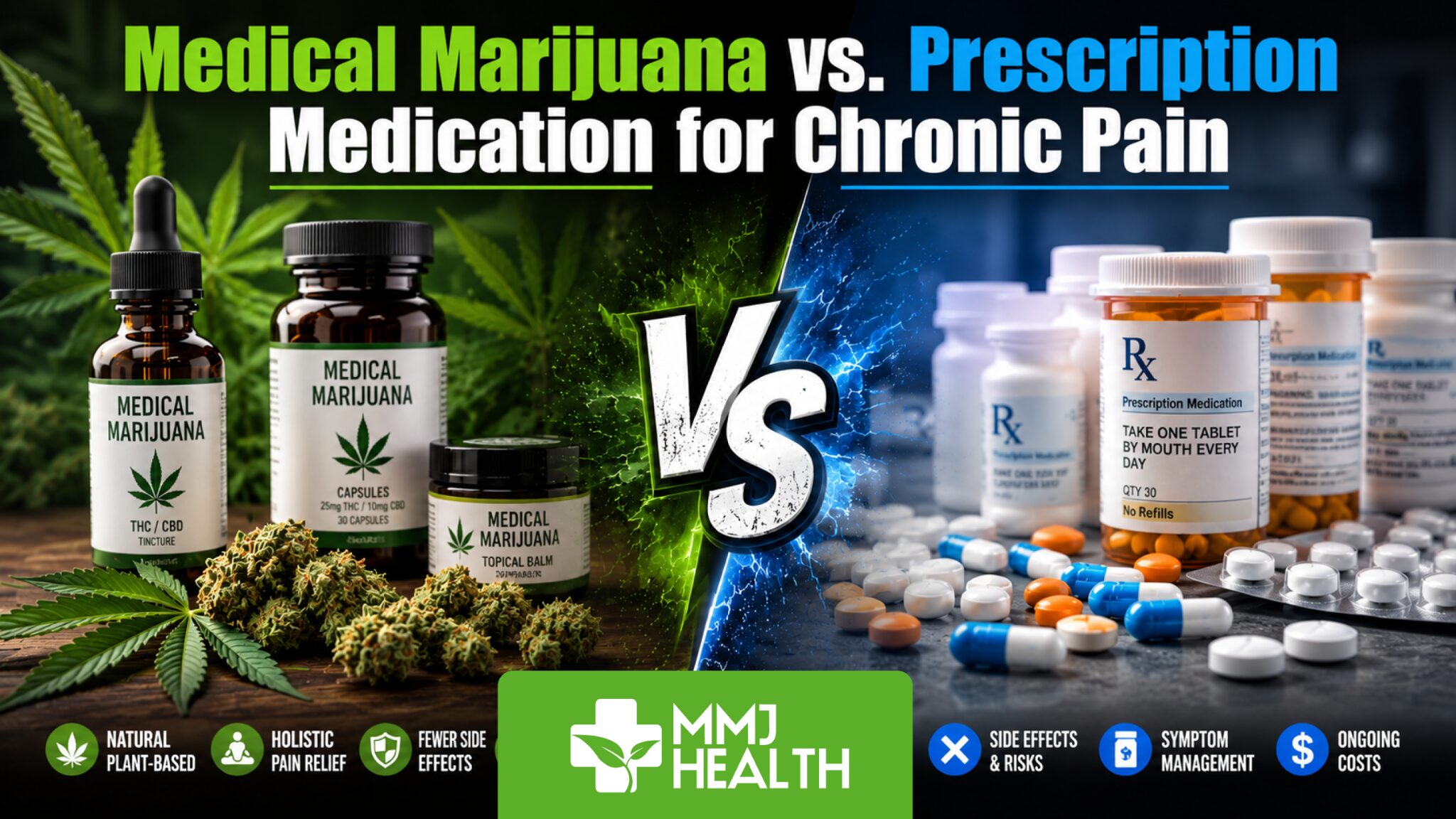
If you live with chronic pain, you know that finding effective, lasting relief is not always straightforward. Prescription medications have long been the primary option, but they come with real concerns: dependency, diminishing effectiveness over time, and side effects that affect daily life.
Medical marijuana is increasingly being considered as a legitimate alternative or complement to traditional prescription treatment. Research is growing, state programs are expanding, and more patients are asking the same question: could cannabis work better for me than the medication I am already taking?
This guide breaks down how medical marijuana compares to prescription drugs for chronic pain management, what the research says, and how patients in Florida, Georgia, and Kentucky can explore their options.
Ready to find out if you qualify?
Medical marijuana and prescription medications both address chronic pain, but through different mechanisms. Prescription opioids block pain signals in the brain, while cannabis interacts with the body’s endocannabinoid system to modulate pain perception and reduce inflammation. A 2025 study published in the journal Pain found that medical marijuana was at least as effective as prescription medications for chronic pain, and potentially more effective in some patients. The right approach depends on your condition, medical history, and the guidance of a licensed physician.
5 Key Things to Know
- Medical marijuana interacts with the endocannabinoid system, which regulates pain, inflammation, mood, and sleep.
- A 2025 peer-reviewed study found patients using medical marijuana had higher rates of clinically meaningful pain relief than those on prescription analgesics.
- A systematic review in the Journal of Pain Research found 62% of patients reported significant pain reduction with cannabis.
- Chronic pain is a qualifying condition for medical marijuana in Florida, Georgia, and Kentucky.
- Research suggests only around 9% of medical cannabis users develop dependency, compared to a significantly higher risk profile with opioids.Is Bipolar Disorder a Qualifying Condition in Florida?
How Do Prescription Medications Treat Chronic Pain?
Prescription medications for chronic pain fall into several categories. Opioids such as oxycodone, hydrocodone, and morphine work by binding to receptors in the brain and central nervous system, blocking pain signal transmission. They act quickly, typically within 15 to 30 minutes, which is why they remain common for acute pain situations. Non-opioid options include NSAIDs, anticonvulsants like gabapentin, and antidepressants, each targeting pain through different pathways.
The core problem with opioids for long-term chronic pain is tolerance. The same dose becomes less effective over time, often requiring higher amounts to achieve the same relief. A 2024 Cochrane review found opioids reduced chronic pain by roughly 30% on average, leaving a significant share of patients without adequate relief. Long-term use also carries risks of physical dependence, hormonal disruption, immune suppression, and opioid-induced hyperalgesia, a condition where the medication actually increases sensitivity to pain.
Non-opioid prescription drugs carry their own limitations. NSAIDs taken long-term can affect kidney function and cardiovascular health. Anticonvulsants and antidepressants used for pain are not effective for all patients and often cause fatigue, weight gain, or mood changes.
How Does Medical Marijuana Address Chronic Pain?
Medical marijuana works through an entirely different system. The human body has an endocannabinoid system (ECS), a network of receptors throughout the brain, nervous system, and immune tissue that regulates pain perception, inflammation, mood, and sleep. The two primary active compounds in cannabis, THC and CBD, bind to receptors in the ECS. THC reduces the intensity of pain signals directly, while CBD works more indirectly by reducing inflammation and calming the nervous system’s response to pain.
Unlike opioids, which block pain primarily in the brain, cannabinoids may work across multiple pain pathways at once. Cannabis is also thought to be particularly effective for neuropathic pain, which involves damage or dysfunction in the nervous system and is often resistant to conventional medications. A 2023 meta-analysis found cannabis had a 45% efficacy rate specifically for neuropathic pain, making it one of the stronger evidence categories for cannabis use.
In terms of onset, inhalation methods produce effects within minutes and are often used for acute flare-ups, while oral formats such as capsules, tinctures, and edibles take 30 to 90 minutes but provide longer-lasting relief, making them better suited for sustained daily pain management. New to cannabis products? Our guide to cannabis products for new users walks through what to expect.
What Does the Research Say?
A landmark 2025 study published in the journal Pain compared outcomes across more than 8,500 chronic pain patients. Researchers at the University of Pittsburgh found that patients using medical marijuana under physician supervision had higher rates of clinically meaningful improvement in pain compared to those receiving prescription analgesics. Among patients co-prescribed opioids, those who also used medical marijuana saw a mean reduction of nearly 40% in opioid dosage over six months.
A systematic review published in the Journal of Pain Research found that 62% of chronic pain patients reported significant pain reduction when using cannabis as part of their treatment. A separate multi-site survey of 525 patients published in Cureus found that over 85% of those combining medical cannabis with opioids reported either stopping opioids completely or reducing use, with most sustaining that change for over a year.
Research also suggests cannabis addresses pain more holistically than opioids. A 2023 peer-reviewed study found that patients using medical cannabis scored significantly higher on positive emotional effects and overall wellbeing compared to those using opioids, while reporting similar levels of pain reduction. Opioids tend to suppress pain but do little for the sleep disruption, mood changes, and functional limitations that accompany chronic pain conditions.
Individual responses vary based on product formulation, dosage, delivery method, and the specific pain condition. Medical supervision is essential for finding an approach that works for your situation.
Thinking about making the switch or adding cannabis to your current plan?
Same-day appointments available.
How Do the Side Effect Profiles Compare?
Opioids carry the highest long-term risk profile of the common prescription pain medications. Physical dependence can develop within weeks of regular use, and the risk of fatal overdose in cases of misuse is well established. The CDC has reported approximately 47,000 opioid overdose deaths per year in the United States, a figure that reflects both the scale of use and the danger of long-term reliance on these medications.
Medical marijuana does carry its own side effect profile. Some patients experience dizziness, dry mouth, mild cognitive effects, or drowsiness, particularly with higher-THC formulations. Research indicates that only around 9% of medical cannabis users develop dependency, a significantly lower rate than opioids. Cannabis withdrawal, while real for some users, tends to be milder and less medically significant than opioid withdrawal.
For many chronic pain patients, particularly those managing pain over months or years, the risk-benefit comparison favors exploring cannabis under physician guidance as either a complement or alternative to prescription drugs. You can also read why medical cannabis should be treated like medicine for more context on the clinical case for cannabis.
Is Chronic Pain a Qualifying Condition in Florida, Georgia, and Kentucky?
Yes, in all three states where MMJ Health operates. Florida covers chronic nonmalignant pain and offers one of the most established programs in the Southeast, with telehealth evaluations available. Georgia includes chronic pain as a qualifying condition through its low-THC oil program, requiring patients to be listed on the state registry. Kentucky recognizes “chronic, severe, intractable, or debilitating pain” under Senate Bill 47, which took effect January 1, 2025, with an in-person evaluation required for new patients and telehealth available for renewals.
Medical marijuana remains a Schedule I substance at the federal level, but all three state programs are fully legal and regulated. Patients who follow their state’s program are operating within state law. For a full list of conditions that qualify, see MMJ Health’s qualifying conditions page.
Can Medical Marijuana Replace Prescription Pain Medication?
For some patients, medical marijuana may provide enough relief to reduce or eventually eliminate their need for prescription medications, and the research cited above supports this, particularly for opioid reduction. For others, especially those with severe pain conditions requiring rapid intervention, prescription medications may still play a role.
The most evidence-supported path is a multimodal approach: using medical cannabis as part of a broader, physician-supervised pain management plan rather than as an isolated replacement. Research consistently shows that patients who use cannabis alongside their existing treatment tend to achieve better outcomes than those who switch abruptly. This also allows for gradual opioid tapering under medical supervision, which is both safer and more sustainable.
Any changes to your current prescription regimen should always be made with your healthcare provider’s involvement. See how MMJ Health’s evaluation process works before you book.
Frequently Asked Questions
Ready to Explore Your Options?
Living with chronic pain does not mean accepting the limitations or risks of prescription medication as your only path. Medical marijuana offers a physician-supervised option backed by growing research and accessible through established state programs in Florida, Georgia, and Kentucky.
MMJ Health makes the evaluation process simple. Same-day appointments are available, evaluations take less than 30 minutes, and we offer a 100% money-back guarantee if you are not approved.
