

The Great Beverage Shift: Ohio’s Crackdown Is Sending THC Drinks to Kentucky
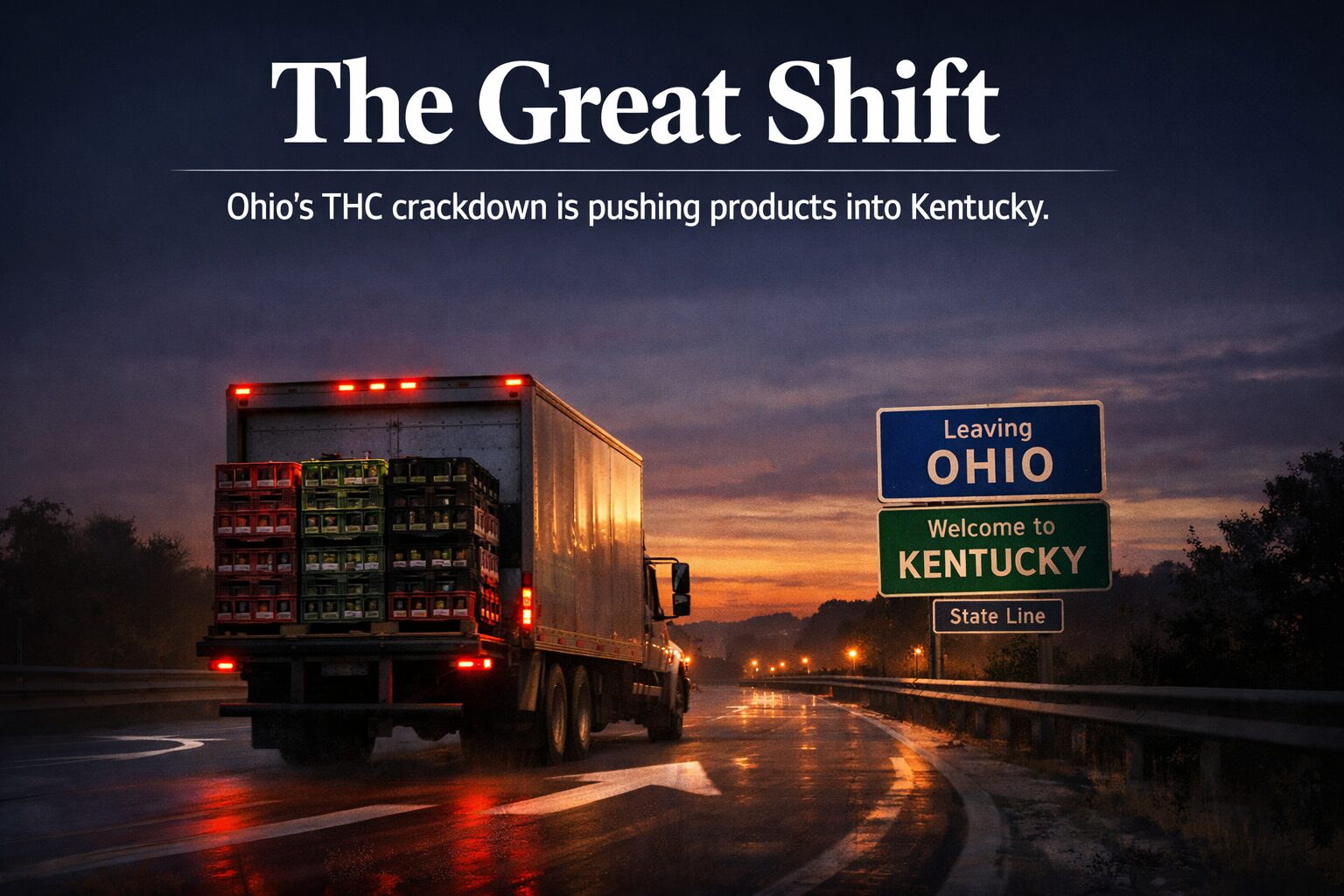
Ohio’s crackdown on THC beverages under SB 56 has pushed brands to move inventory into Kentucky, where cannabis-infused drinks remain legal under regulated conditions. While Ohio restricted sales to dispensaries, Kentucky allows THC beverages through a controlled, alcohol-style distribution system with strict limits.
A regional shift is unfolding across state lines. In March 2026, Ohio tightened enforcement on intoxicating hemp-derived products, including THC beverages. Within days, brands began redirecting inventory into Kentucky.
This is not a slow policy ripple. It is a supply-chain reaction happening in real time.
For Kentucky, that creates both opportunity and pressure.
What Changed in Ohio
Ohio’s Senate Bill 56 took effect on March 20, 2026. The law reshaped how THC products, especially beverages, can be sold.
The core issue regulators highlighted was consistency. Many hemp-derived THC drinks were being sold through bars, breweries, and retail outlets without the same oversight required in the state’s licensed cannabis system.
Under the updated enforcement approach:
- THC products are effectively restricted to licensed dispensaries
- Products sold outside regulated channels face removal
- Testing, packaging, and production standards are enforced more strictly
In practical terms, this eliminated the “open retail” environment that THC beverages had been operating in.
The timing also mattered. A previously proposed transition window that would have allowed lower-dose beverages to remain in circulation was removed, accelerating the shift.
For businesses, the message was immediate:
Sell through dispensaries. Or stop selling.
The Immediate Market Reaction: Inventory Has to Go Somewhere
When a market closes, supply doesn’t disappear. It moves.
In Ohio’s case, that meant:
- Bars and retailers clearing existing THC drink inventory
- Manufacturers looking for nearby legal markets
- Distributors redirecting shipments across state lines
Kentucky became the closest viable outlet.
Coverage around the implementation described businesses actively relocating their product rather than destroying it. Reports included specific examples of inventory being shipped from Ohio into northern Kentucky, where legal pathways still exist.
This is the kind of shift that doesn’t wait for a long-term strategy. It happens quickly, driven by compliance deadlines and inventory costs.
Why Kentucky Becomes the Pressure Valve
Kentucky’s regulatory framework for THC beverages is not unregulatedbut it is functional.
Unlike Ohio’s tightened model, Kentucky allows cannabis-infused beverages within a defined structure:
- Treated similarly to alcohol
- Restricted to adults 21+
- Limited to 5 mg of intoxicating cannabinoids per 12-ounce serving
- Sold through a licensed distribution system
This creates a middle ground:
- Not a free-for-all retail environment
- Not restricted solely to dispensaries
For brands leaving Ohio, that balance is enough to keep products moving.
Understanding Kentucky’s System (AIO Clarity)
For readers searching “Are THC drinks legal in Kentucky?”, the answer requires nuance:
What is allowed:
- Hemp-derived THC beverages within potency limits
- Sales through licensed retailers under ABC rules
- Distribution through a structured supply chain
What is not allowed:
- Unlimited potency or unregulated products
- Open sales across all retail environments
- Direct-to-consumer bypassing of distribution rules
Kentucky’s approach mirrors alcohol regulation, using a three-tier system:
👉 Manufacturer → Distributor → Retailer → Consumer
This separation is intentional. It prevents vertical integration and ensures oversight at each stage.
Evidence of the Shift: Products Moving Into Kentucky
This isn’t theoretical.
Reports from the Ohio–Kentucky region describe:
- Brands moving significant inventory across state lines
- Retailers in Kentucky absorbing redirected supply
- Breweries shipping THC beverage stock into Kentucky markets
In one reported case, a company prepared to move roughly $150,000 worth of inventory out of Ohio following enforcement changes.
For Kentucky retailers, this creates a sudden increase in available product, and potentially, demand.
What This Means for Kentucky’s Market
The short-term effect looks like a boost:
- Increased product availability
- More brand presence in border markets
- Potential revenue lift for retailers
But this is not a stable equilibrium.
⚠️ Key risks:
1. Regulatory Tightening
Kentucky’s framework is still evolving. Increased visibility and cross-border inflows could trigger stricter enforcement or updated rules.
2. Policy Uncertainty
Legislation and rulemaking around cannabis and hemp-derived products remain active. Today’s system may not remain unchanged.
3. Market Saturation
A sudden influx of inventory can temporarily distort pricing and competition.
The Bigger Picture: A Regional Policy Feedback Loop
This shift highlights something larger than beverages.
Cannabis policy does not operate in isolation. When one state tightens rules, neighboring states feel the impact.
Ohio’s crackdown didn’t eliminate THC drinks.
It relocated them.
Kentucky’s current framework makes it the nearest “release valve” for that pressure, but only as long as its own regulatory balance holds.
What Businesses and Consumers Should Watch Next
Between now and late 2026, several factors will shape the outcome:
- Kentucky’s ongoing regulatory developments
- Enforcement trends from the ABC
- Potential legislative adjustments
- Consumer demand patterns in border regions
For businesses, this is a moment of opportunity but also of caution.
For consumers, it’s a reminder that availability does not equal permanence.
