

If Cannabis Is Medicine, Why Don’t We Treat It Like One?
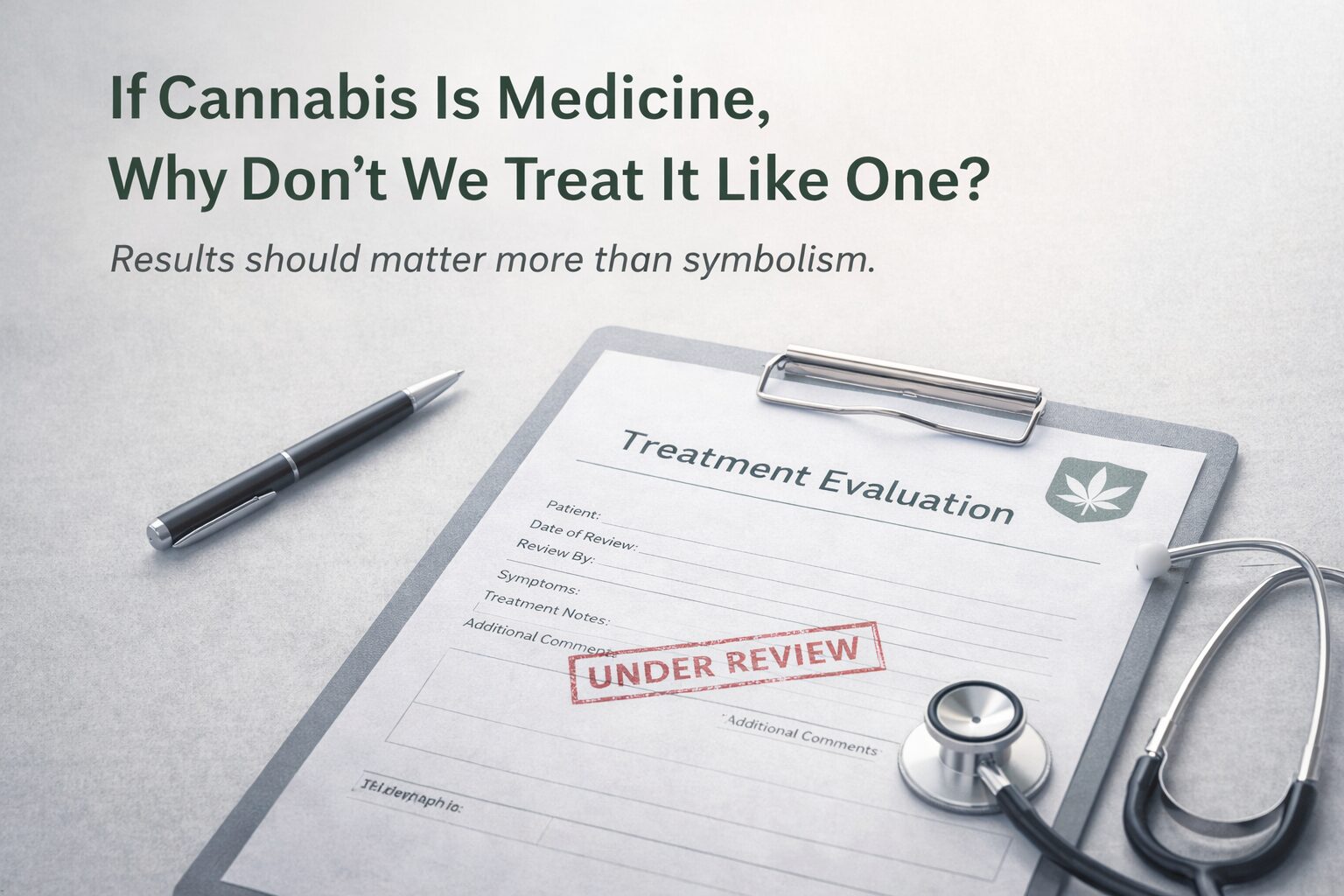
If cannabis were judged the way most medical treatments are judged, this conversation would be much shorter.
It wouldn’t start with disclaimers.
It wouldn’t detour into politics.
And it definitely wouldn’t require a separate tone of voice.
Doctors would ask what they always ask:
Does it work?
For whom?
How reliably?
At what cost or risk?
That’s it. That’s the test.
Instead, medical cannabis exists in a strange parallel universe where results matter, but symbolism matters more. Where outcomes are discussed, but context is always on trial. Where the medicine keeps working, yet the system around it continues to act as if it’s on probation.
If you’re wondering whether you qualify under Florida law, you can review the full list here.
Ordinary Medicine Is Quiet by Design
Most medicines don’t announce themselves.
They don’t arrive with cultural baggage or public debates. They don’t need to justify their existence every time a doctor prescribes them. They’re evaluated, adjusted, and, when necessary, replaced. Calmly. Methodically. Without press conferences.
That’s how legitimacy works in medicine.
It’s boring.
It’s repetitive.
It’s earned through outcomes, not arguments.
Cannabis once lived in that world. Not because it was perfect, but because medicine itself wasn’t perfect either. Doctors used what worked. They stopped using what didn’t. The process was blunt, imperfect, and practical.
Modern medical cannabis, by contrast, feels loud. Every step is labeled. Every decision is documented. Every interaction is treated as if it needs translation.
Not because the plant is unpredictable.
Because the system around it is cautious to the point of self-consciousness.
Medicine Is Usually Graded on Results, Not Reputation
Here’s something most patients never have to think about:
When a medication has a messy history, doctors don’t typically punish the patient for it.
We don’t ask people on blood pressure medication to defend pharmaceutical marketing scandals from the 1990s. We don’t require special registries for drugs that were once overprescribed. We adjust protocols. We tighten guidelines. We move forward.
Medical cannabis, however, is still being graded on reputation instead of results.
It’s treated as a category that needs supervision, rather than a treatment that needs evaluation. That’s a subtle but important difference.
When a doctor recommends physical therapy, nobody asks what physical therapy represents culturally. When a sleep aid is prescribed, nobody worries about whether it sends the wrong message.
Cannabis, meanwhile, still has to prove it belongs in the room.
Why Structure Feels Like Scrutiny
From the outside, modern medical cannabis systems can feel excessive.
Evaluations.
Recertifications.
Registries.
Renewals.
It’s easy to mistake this structure for medical rigor. In reality, much of it exists to reassure everyone except the patient.
These systems weren’t built because cannabis is uniquely dangerous. They were built to rebuild trust after a long period where medicine was replaced by fear, law, and moral signaling.
Structure, in this case, is less about science and more about optics.
That doesn’t mean it’s pointless. Structure protects access. It creates consistency. It keeps care legal and defensible. But it does mean patients sometimes feel like they’re navigating an obstacle course that other treatments don’t require.
Not because their condition is unusual.
But because the medicine still carries a footnote.
What Ordinary Treatment Actually Looks Like
If cannabis were treated like ordinary medicine again, a few things would quietly change.
The language would simplify.
The tone would neutralize.
The process would feel familiar instead of exceptional.
Doctors would still evaluate patients. Follow-ups would still matter. Adjustments would still happen. But the focus would return to outcomes, not compliance theater.
Patients wouldn’t feel like they’re constantly proving legitimacy. They’d feel like they’re participating in care.
This doesn’t mean removing guardrails or pretending history didn’t happen. It means recognizing that medicine matures when it stops apologizing for existing.
Cannabis doesn’t need special treatment.
It needs normal treatment.
Why This Matters More Than It Sounds
This isn’t just a philosophical exercise.
How a treatment is framed affects how patients experience it. When care feels conditional, patients internalize that. When medicine feels provisional, people hesitate to rely on it fully.
Normalizing medical cannabis isn’t about winning debates. It’s about removing friction between patients and care.
The quieter the system becomes, the better it’s usually working.
Patients don’t want to feel like pioneers. They want predictability. They want continuity. They want to know that managing their health won’t require constant administrative vigilance.
That’s what ordinary medicine offers.
And it’s what cannabis is slowly, awkwardly returning to.
The Long Way Back to Boring
The irony of modern medical cannabis is that progress often looks like regression.
Less spectacle.
Less explanation.
Less urgency.
More routine.
More predictability.
More trust.
The future of medical cannabis isn’t louder advocacy or flashier positioning. It’s quiet competence. It’s the day nobody needs to explain why it’s being prescribed.
That’s when it will have fully re-entered medicine.
Not as a symbol.
Not as an exception.
But as a treatment that does its job and stays out of the spotlight.
Meme suggestion:
Text-only meme
“Every medicine wants to be boring. Some just take longer to get there.”
A Thought Worth Carrying Forward
If cannabis were treated like ordinary medicine again, the conversation wouldn’t end. It would simply change tone.
Fewer arguments.
More data.
Less symbolism.
More care.
The real question isn’t whether cannabis belongs in medicine. History already answered that.
The question is how long it will take for the system to stop treating it like a guest who needs constant supervision.
Because when medicine finally becomes ordinary again, patients usually benefit first.
Ready to Take the Next Step?
If you’re dealing with chronic pain, anxiety, PTSD, or other qualifying conditions, medical marijuana may already be an option for you under Florida law.
✔ Same-day evaluations
✔ Florida OMMU registered physicians
✔ Quick approval timelines
