

Medical Marijuana Access in Georgia: What’s Changing, Why It Matters, and What Comes Next
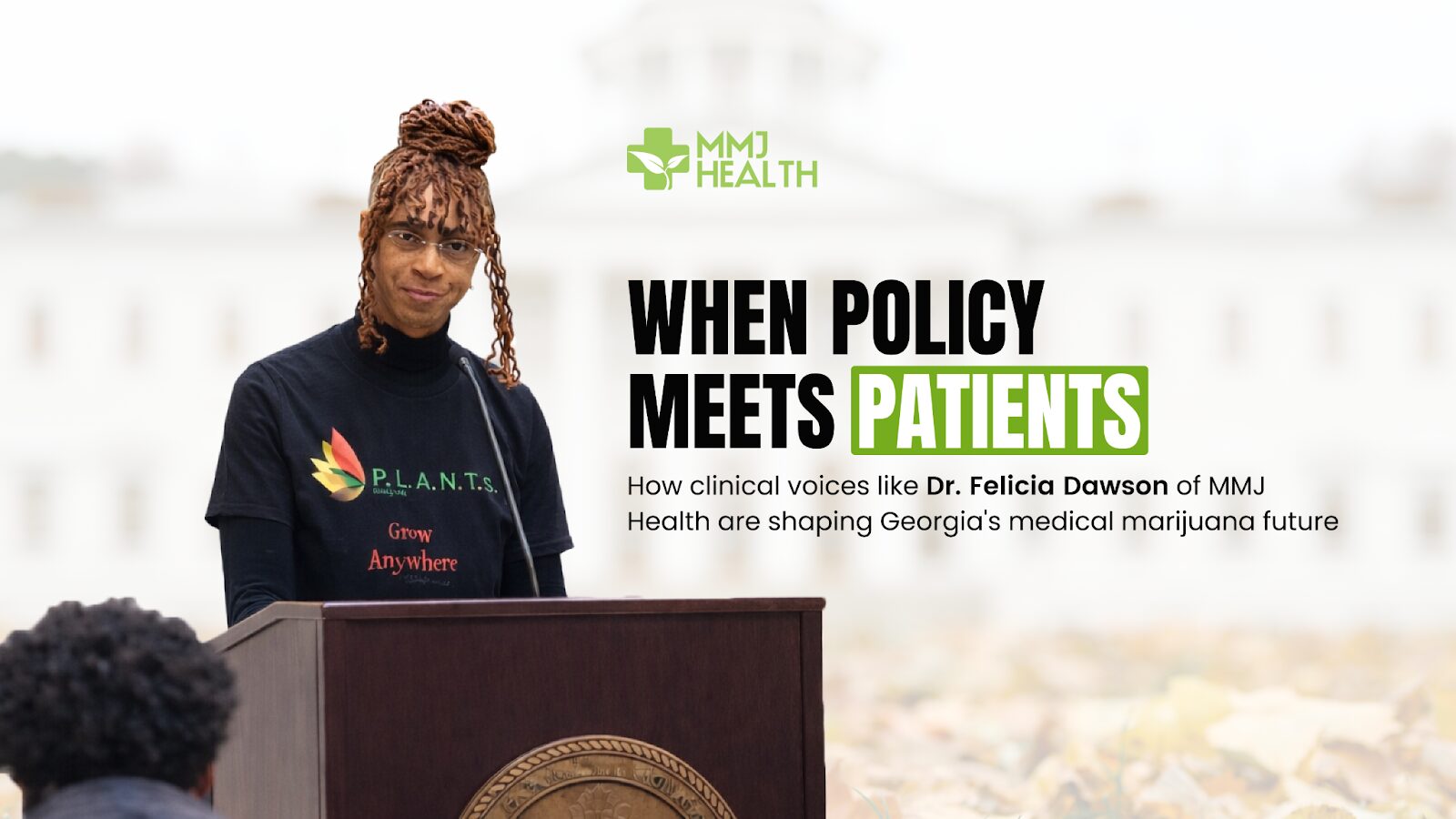
Medical Marijuana in Georgia Is Still Evolving
Georgia’s medical marijuana program was designed to be cautious.
From the beginning, the law emphasized limits, oversight, and incremental change. Patients could qualify, register, and legally possess low-THC cannabis oil. But the program was never built for speed or breadth.
That design choice still shapes access today.
Over time, the system has grown more visible, but not always more usable. Legal pathways exist, yet many patients continue to face practical barriers when they try to use them. Product options remain narrow. Provider participation is limited. Geography still matters.
This isn’t a moment of sudden reform. It’s a period of adjustment.
What matters now is not whether medical marijuana is legal in Georgia, but how effectively the system serves the people it was created for.
Access isn’t theoretical. It’s operational.
A Brief History of Medical Marijuana in Georgia
Georgia legalized a low-THC medical cannabis oil program in 2015. At the time, the decision was cautious by design.
The law allowed patients with specific qualifying conditions to possess and use cannabis oil containing very limited amounts of THC, the psychoactive component of cannabis. What it did not allow was just as important. Smoking flower was prohibited. Standard edibles were not permitted. Product variety was narrow. Distribution was tightly controlled.
From the beginning, Georgia chose restraint.
That decision reflected the political and cultural moment. Lawmakers prioritized control, oversight, and incremental change over broad access. The result was a program that existed on paper long before it functioned well in practice.
Georgia chose caution first.
That choice still shapes access today.
Understanding Georgia’s medical marijuana laws can be confusing.
Get clear, factual guidance on what the program allows today and where limitations apply.
What the Law Currently Allows (and Restricts)
Georgia’s current medical marijuana law is best understood by what it limits.
Low-THC only.
Products must contain very low levels of THC, typically under 5%. Clinically, this means some patients experience relief, while others find the products insufficient for their symptoms.
Restricted product types.
Flower is prohibited. Standard THC edibles are not allowed. Options are largely confined to oils and limited formulations.
Narrow qualifying conditions.
Only a defined list of medical conditions qualifies a patient for the program. Many chronic or debilitating illnesses fall outside that list, even when symptoms overlap.
Physician participation barriers.
Doctors must register with the state to recommend medical cannabis, and many choose not to. This reduces the number of providers available to patients.
Supply and geographic challenges.
Licensed production and dispensing remain limited. Patients often travel long distances across counties to obtain product, adding cost and complexity.
The takeaway is simple:
Legal does not automatically mean accessible.
Not sure if you qualify under Georgia’s current medical marijuana rules?
Learn how eligibility works and what low-THC access realistically looks like for patients.
The Real-World Impact on Patients and Caregivers
Policy decisions are abstract until they meet real lives.
For many patients in Georgia, access involves long drives, limited product choice, and high out-of-pocket costs. Caregivers shoulder logistical burdens, coordinating appointments, transportation, and compliance within a narrow framework.
Some patients qualify on paper but struggle to find products that meaningfully address their symptoms. Others find that low-THC formulations help, but not enough. The gap between eligibility and relief is where frustration grows.
This isn’t about convenience.
It’s about practicality.
When access requires extraordinary effort, fewer patients benefit, even when the law says they can.
What Changes Are Being Advocated in Georgia
Georgia’s medical marijuana program is not being challenged in principle. It’s being examined in practice.
As the program matures, clinicians and policymakers have begun addressing areas where current restrictions limit real-world medical effectiveness. These conversations are not about removing oversight. They are about refining a system that was initially conservative when it kicked off.
Here are some of the major changes that are being discussed at the legislative level:
Expanding allowable product types
and, where medically appropriate, adjusting THC thresholds to better match clinical needs.
Broadening qualifying conditions
to reflect how symptoms present in real patients, not just diagnoses on a list.
Simplifying physician participation
reducing unnecessary administrative barriers that discourage clinicians from registering.
Improving patient access
while maintaining oversight, quality controls, and safety standards.
These proposals emphasize safety, oversight, and clinical judgment. The goal is alignment between statutory limits and medical reality.
This is not deregulation. It is adjustment.
The Role of Clinical Voices in Policy: Dr. Felicia Dawson
Policy works best when it reflects how medicine is actually practiced.
In Georgia, clinicians have begun playing a more direct role in shaping medical marijuana policy by communicating the practical impact of existing restrictions on patients and caregivers.
Dr. Felicia L. Dawson, MD, ABOG of MMJ Health has been actively engaging with members of the Georgia General Assembly to provide clinical context around patient outcomes, treatment limitations, and unintended consequences of overly narrow regulations.
Her work focuses on translating patient experience into language policymakers can evaluate. This includes explaining where low-THC limits may fall short, why certain product forms matter clinically, and how administrative friction affects continuity of care.
This role is not advocacy for expansion without limits.
It is advocacy for clarity, safety, and medical discretion within a regulated system.
An important theme in these discussions is keeping patients within regulated medical channels. When legal options tread beyond medical parameters, patients are more likely to seek unregulated alternatives.
Refinement, when guided by medical expertise, helps preserve oversight rather than weakening it.
Clinical Perspectives on Georgia’s Medical Marijuana Laws (Podcast Q&A)
To better understand how Georgia’s medical marijuana framework affects patients in practice, we recorded a conversation with Dr. Dawson focused on the clinical realities behind the policy.
This discussion centers on patient outcomes, medical judgment, and the gap between legal access and practical care—offering insight into why incremental refinement matters.
🎧 Listen to the full conversation here:
Key Questions Discussed in the Podcast
What changes to Georgia’s medical marijuana regulations are being advocated?
The focus is on three priorities: better access, greater product variety, and stronger safety standards. Recommendations include removing the 5% THC cap, expanding delivery methods beyond oral and topical products, and allowing physicians to recommend cannabis for any condition they believe it may help.
How would these changes improve patient access and affordability?
Greater access would reduce cost barriers and expand participation beyond the small percentage of currently enrolled patients. Medical cannabis should be treated like other medicines in Georgia, including exemption from taxation, to improve affordability for patients with chronic conditions.
Why is product variety clinically important?
Different conditions respond differently to cannabinoids. Patients need access to full-spectrum products, CBD-dominant options, and delivery systems that allow for appropriate dosing. This is especially important for conditions such as anxiety, depression, PTSD, and seizure disorders.
How would regulatory adjustments impact patient outcomes?
Expanded access could allow hundreds of thousands of Georgians with qualifying conditions to seek regulated medical care rather than relying on unregulated alternatives. In a healthcare system facing Medicaid and ACA cuts, cannabis may serve as a critical treatment option for vulnerable patients.
What safety concerns must be addressed alongside expanded access?
Strong oversight is essential. This includes transparent third-party testing, accurate labeling, and improved lab capabilities to detect new semi-synthetic intoxicating cannabinoids. Without proper testing infrastructure, regulation cannot be effective.
What are the biggest barriers to reform in Georgia?
Stigma remains a major obstacle. It is reinforced by irresponsible actors producing unregulated intoxicating hemp products, which undermines trust in the broader medical cannabis system—especially in a conservative state.
What steps are being taken to overcome these barriers?
Education is key. Lawmakers and physicians are being provided with evidence-based research, including historical context showing that cannabis was widely prescribed in the U.S. a century ago. Reducing stigma among medical professionals is critical to broader acceptance.
Why is physician and veteran involvement so important?
Many patients already use cannabis but do not disclose it to their doctors due to stigma. Encouraging physician awareness and mobilizing veterans—whose voices carry weight in Georgia’s legislature—could significantly advance medical marijuana reform.
Georgia’s medical marijuana debate is no longer about legality—it is about alignment between medical reality and regulation. Thoughtful, clinician-guided reform can improve patient access and safety while preserving oversight, reducing stigma, and keeping care within regulated medical channels.
Key Takeaway from the Discussion
Clinical input helps ensure that Georgia’s medical marijuana program remains medically grounded, regulated, and patient-centered. Thoughtful refinement—guided by real patient experience—supports both access and accountability.
Why These Changes Matter Beyond Individual Patients
Medical marijuana policy does not operate in isolation.
It shapes patient behavior, provider participation, and public health outcomes.
When programs are overly restrictive, compliance becomes harder to sustain. When access does not align with medical need, oversight weakens rather than strengthens.
Thoughtful refinement allows the state to:
- Maintain regulatory control
- Improve patient education
- Encourage physician participation
- Reduce reliance on unregulated alternatives
From a systems perspective, access is not just about relief.
It is about keeping care structured, monitored, and accountable.
Policy discussions are ongoing—but today’s rules still matter.
Speak with a registered medical provider to understand current eligibility and options.
How Patients in Georgia Can Stay Informed and Prepared
Patients navigating Georgia’s medical marijuana program should understand that change is occurring gradually.
Legislative discussions are ongoing, and any updates to qualifying conditions, product forms, or THC thresholds are likely to be incremental rather than immediate.
Patients can stay prepared by:
- Monitoring updates from the Georgia General Assembly
- Relying on trusted educational sources
- Speaking with registered medical providers about current eligibility and future considerations
Understanding the system as it exists today helps patients avoid confusion while remaining informed about what may come next.
MMJ Health’s Role in Supporting Georgia Patients
In restrictive systems, clarity matters more than optimism.
MMJ Health’s role in Georgia is not to promise outcomes. It is to help patients understand the rules as they exist today, evaluate eligibility responsibly, and navigate the process without confusion.
That includes:
- Education-first conversations
- Physician evaluations where allowed
- Clear explanations of current limits and possibilities
MMJ Health is not the solution to Georgia’s policy constraints. It is a guide within them.
Guides matter most when the terrain is uneven.
Access Improves When Policy and Practice Align
Georgia’s medical marijuana program is not static. It is moving, slowly and deliberately.
The path forward will likely involve adjustment, not overhaul. Clinical input, patient experience, and legislative intent will continue to shape what access looks like in practice.
Progress in medical systems rarely arrives all at once. It compounds when policy and practice move closer together.
For now, the work is patience, clarity, and engagement.
Stay informed.
Stay realistic.
Seek guidance when needed.
Access improves when understanding keeps pace with change.
Need help understanding Georgia’s medical marijuana rules as they exist today?
MMJ Health provides education-first medical evaluations and clear guidance within Georgia’s current low-THC framework—so patients can make informed decisions without confusion or false expectations.
👉 Learn whether you qualify and what access realistically looks like in Georgia
