

Cannabis Was Medicine Long Before It Was Controversial
If you grew up absorbing modern pop culture, you’d be forgiven for thinking cannabis appeared fully formed sometime in the late 1960s, immediately followed by lava lamps, tie-dye, and a general refusal to answer phone calls before noon.
History would like a word.
Long before cannabis became a political football, a cultural shorthand, or the plant everyone suddenly has very strong opinions about, it lived a far less exciting life. It sat quietly on pharmacy shelves. Doctors prescribed it. Patients took it. Nobody argued about it on the internet because the internet did not exist, and everyone was better for it.
In other words, cannabis wasn’t controversial. It was boring. And in medicine, boring is usually a compliment.
When Cannabis Was Just… Another Ingredient
For most of Western and European medical history, cannabis wasn’t “alternative” medicine. It wasn’t rebellious. It wasn’t edgy.
It was an ingredient.
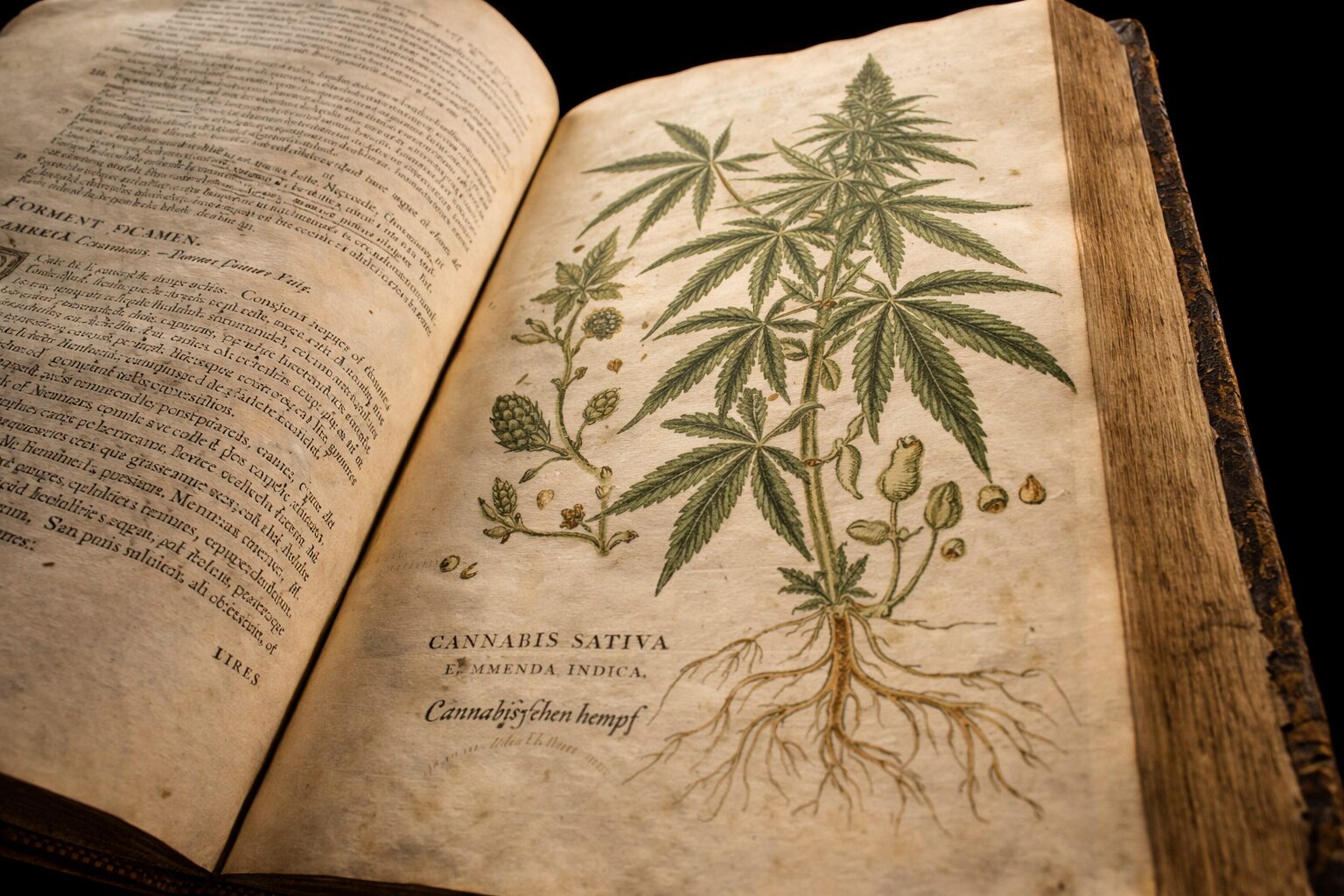
In the 19th and early 20th centuries, cannabis extracts appeared in medical texts, physician manuals, and pharmaceutical catalogues alongside substances like opium, quinine, and digitalis. Doctors prescribed it for pain, muscle spasms, sleep issues, and a range of conditions that modern medicine still struggles to manage neatly.
The key difference wasn’t the plant. It was the framing.
Cannabis was treated the same way other medicines were treated at the time: imprecisely, observationally, and with a lot of professional judgement. Dosages weren’t perfect. Mechanisms weren’t fully understood. But neither were most medications back then. Medicine, as a discipline, was still very much in its “we’re figuring this out as we go” era.
Cannabis wasn’t special. And that’s exactly the point.
Curious how medical cannabis is evaluated today—based on science, safety, and state law?
At MMJ Health, licensed physicians conduct proper medical evaluations to determine whether medical cannabis is appropriate for your condition—just like any other treatment option.
Yes, Doctors Prescribed It (And Nobody Freaked Out)
This part tends to surprise people, mostly because it clashes with the modern narrative.
Cannabis wasn’t hidden away in secret apothecaries or whispered about in back rooms. It was sold openly. Pharmaceutical companies manufactured cannabis tinctures and extracts. Doctors discussed its effects in medical journals without adding moral footnotes or disclaimers about personal responsibility.
No one asked, “But what message does this send?”
They asked, “Does it help the patient?”
That was the bar.
And while cannabis wasn’t a miracle cure, it occupied a useful medical niche. It helped some patients. It didn’t help others. Doctors adjusted accordingly. Again: boring. Sensible. Very uncontroversial.
So… What Happened? (Spoiler: Not Science)
If cannabis had simply stopped working, its story would be short and dull. Medicine would have moved on, filed it away under “interesting but obsolete,” and nobody would be arguing about it a century later.
That is not what happened.
Cannabis didn’t fall out of favor because doctors suddenly discovered it was dangerous or ineffective. Its decline had far more to do with politics, social anxiety, and the sudden urge to legislate morality.
As the early 20th century rolled on, cannabis became entangled with broader cultural fears, immigration politics, and moral panic. Public perception shifted faster than medical evidence. Laws were passed with sweeping language and very little nuance. Medical use became collateral damage.
In a remarkably short span of time, cannabis went from “prescribed medicine” to “problem”, without the plant itself changing at all.
The medicine didn’t change. Society did.
Medical cannabis didn’t become controversial because it stopped being medicine.
At MMJ Health, we help patients navigate modern medical cannabis programs responsibly, legally, and with physician oversight—restoring legitimacy where stigma once took over.
The Awkward Gap Between History and Modern Medicine
This is where things get strange.
Modern medical marijuana programs often feel complex, bureaucratic, and overly cautious. Patients navigate registries, certifications, renewals, and regulations that seem… excessive, especially when compared to how casually cannabis once existed in medical practice.
That tension exists because today’s systems weren’t built on medical continuity. They were built as corrections.
Medical cannabis re-entered healthcare not as a continuation of an old tradition, but as an exception carved out of prohibition. And exceptions come with rules. Lots of them.
This is why modern patients sometimes feel like they’re participating in a pilot program that’s been running for several decades without ever fully graduating into normalcy.
Historically, cannabis was medicine first.
Modernly, it’s medicine with an asterisk.
Why This History Still Matters to Patients Today
You might reasonably ask, ‘Why should any of this matter to someone just trying to manage pain or sleep better in 2026?’
Because understanding the past explains the present.
It explains why medical cannabis programs emphasize structure and documentation.
It explains why evaluations matter.
It explains why the language around care is so careful.
Modern systems are trying to rebuild legitimacy that never should have been lost in the first place.
When you strip away the noise, today’s medical cannabis care is less a radical innovation and more a slow return to something that once existed quietly and sensibly.
The irony is that what feels “new” now is actually very old.
If you’re exploring medical cannabis, you deserve clarity—not confusion.
MMJ Health provides physician-led evaluations, clear guidance, and ongoing patient support—so medical cannabis is treated like what it is: healthcare.
Cannabis Didn’t Need Explaining, Until It Did
For centuries, cannabis existed without a publicist. It didn’t come with slogans, disclaimers, or a legal FAQ. It wasn’t defended on television panels or wrapped in carefully chosen language. It simply did its job.
Doctors used it. Patients took it. The relationship was transactional and unremarkable, which is how most medicine prefers to live.
Only later did cannabis become something that needed constant clarification. Not because its effects changed, but because the rules around it did. What had once been ordinary was suddenly suspicious. What had once been routine now required justification.
That shift didn’t happen in exam rooms. It happened elsewhere.
And once a plant is forced to explain itself, it never quite goes back to being ordinary again.
A Thought Worth Sitting With
This series isn’t about arguing that cannabis is a cure-all or that modern regulation is unnecessary. It’s about remembering that the current debate didn’t start with science, and it won’t end with slogans.
The first step toward clearer medical cannabis care isn’t louder opinions. It’s historical honesty.
Cannabis was medicine long before it was controversial.
The real story isn’t how it entered healthcare.
It’s how it left. And why it’s still finding its way back.
Looking for trusted, physician-guided medical cannabis care?
MMJ Health helps patients access medical marijuana legally, safely, and responsibly—without hype or stigma.
Understanding the deep medicinal roots of cannabis helps reorient how we think about modern medical use. To see how this longstanding use applies to specific populations, like older adults for whom cannabis has long provided therapeutic benefit, read Cannabis Medicine for Seniors Since 1839.
