

The Art and Science of Being High
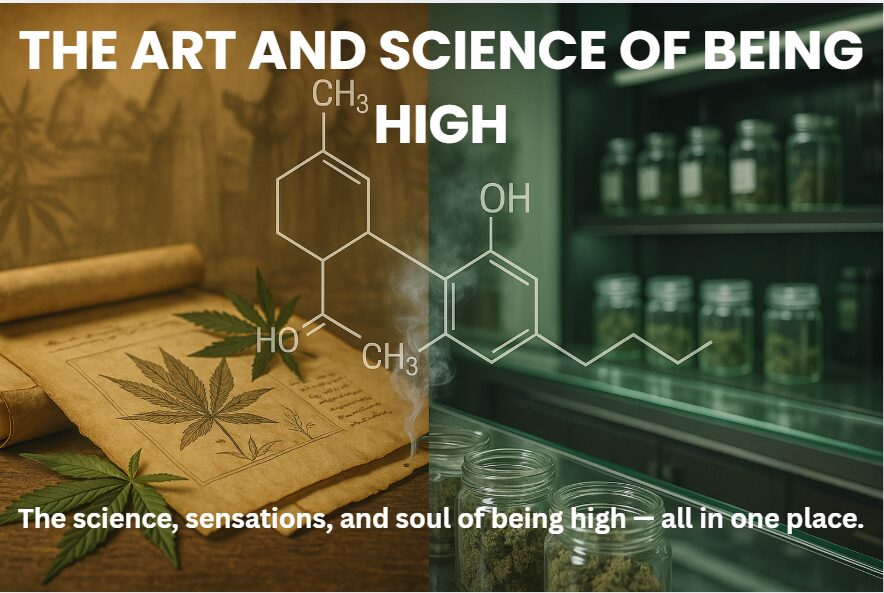
Exploring the Sensations of Being High
Cannabis can be a topic that doesn’t sit well with many, yet millions of people around the world are curious about how it feels to be “high”. When you inhale or munch on marijuana products that contain tetrahydrocannabinol (THC), you enter an altered state. THC is the compound that gives cannabis its intoxicating effects; it can shift your mood, thoughts, and perceptions. In this, what might almost be called a love letter to cannabis, we break down what that experience can be like, how it unfolds, and how to enjoy it safely.
- Being high is a temporary altered state caused by THC interacting with your brain’s receptors.
- Each person’s experience is unique — how much you take, the strain, your body, and your setting all play a part.
- Effects can be positive or uncomfortable, ranging from relaxation and euphoria to anxiety or short-term memory issues.
- Consumption method matters — smoking and vaping work quickly, while edibles and pills take longer but last longer.
- Responsible use is key — start low, go slow, and only use cannabis in a safe, legal setting.
What Does Being High Mean? Understanding the Altered State?
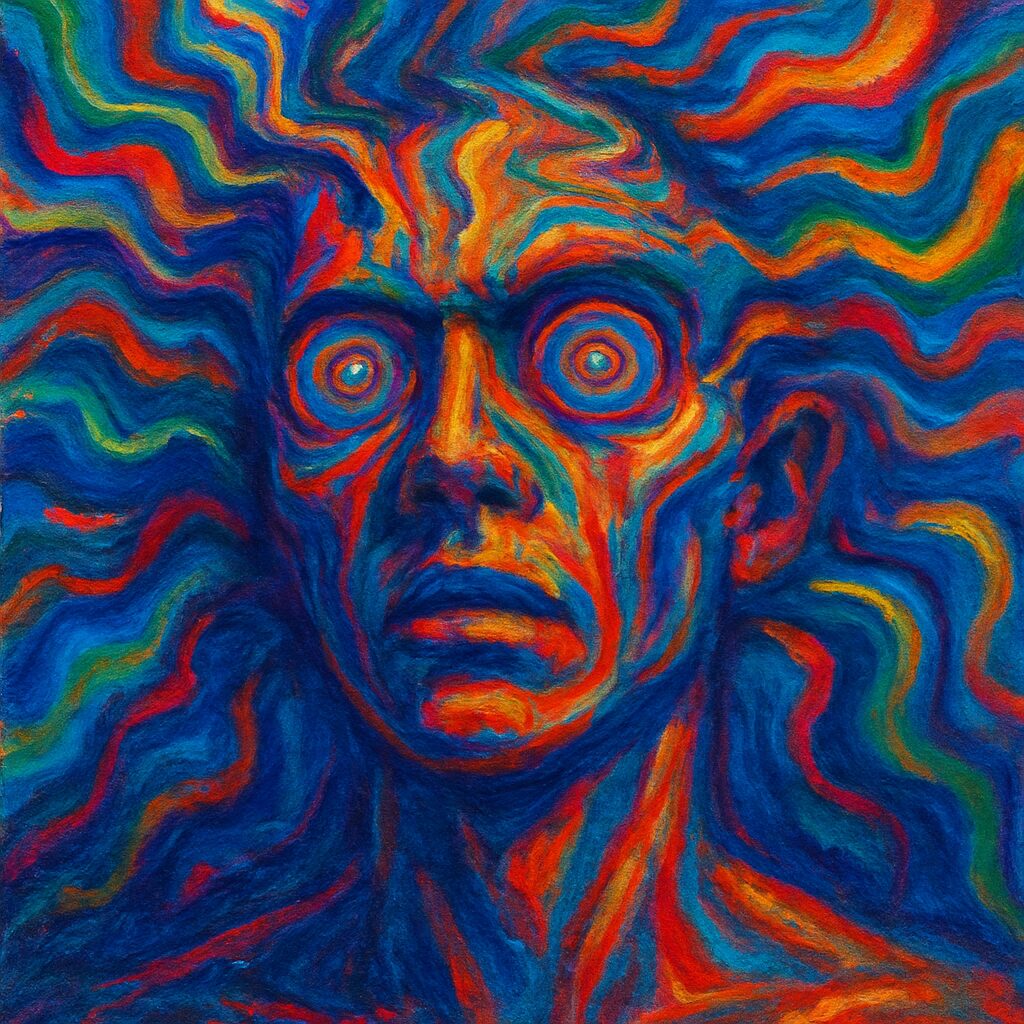
When people talk about being high, they’re referring to the mental and physiological bumps that enter the system from the effects caused by THC. Cannabis plants can usually be found in two broad varieties: marijuana, which is cultivated for its flowers and has more than 0.3% THC by weight, and hemp, which contains 0.3% or less and is not intoxicating. When you take in marijuana, THC hooks onto receptors in your brain’s endocannabinoid system. This sensual tango between the two alters neurotransmitter release, changing how you think, feel, and perceive your surroundings.
Common Effects of Being High
- Time feels slower
- Sounds and colors feel more vivid
- Your thoughts may take creative or unusual turns
- You may feel relaxed, talkative, or more aware of your senses
Understanding these effects helps you approach cannabis use mindfully, especially when guided by medical expertise.
The Science Behind Getting High: How THC Impacts the Brain and Body
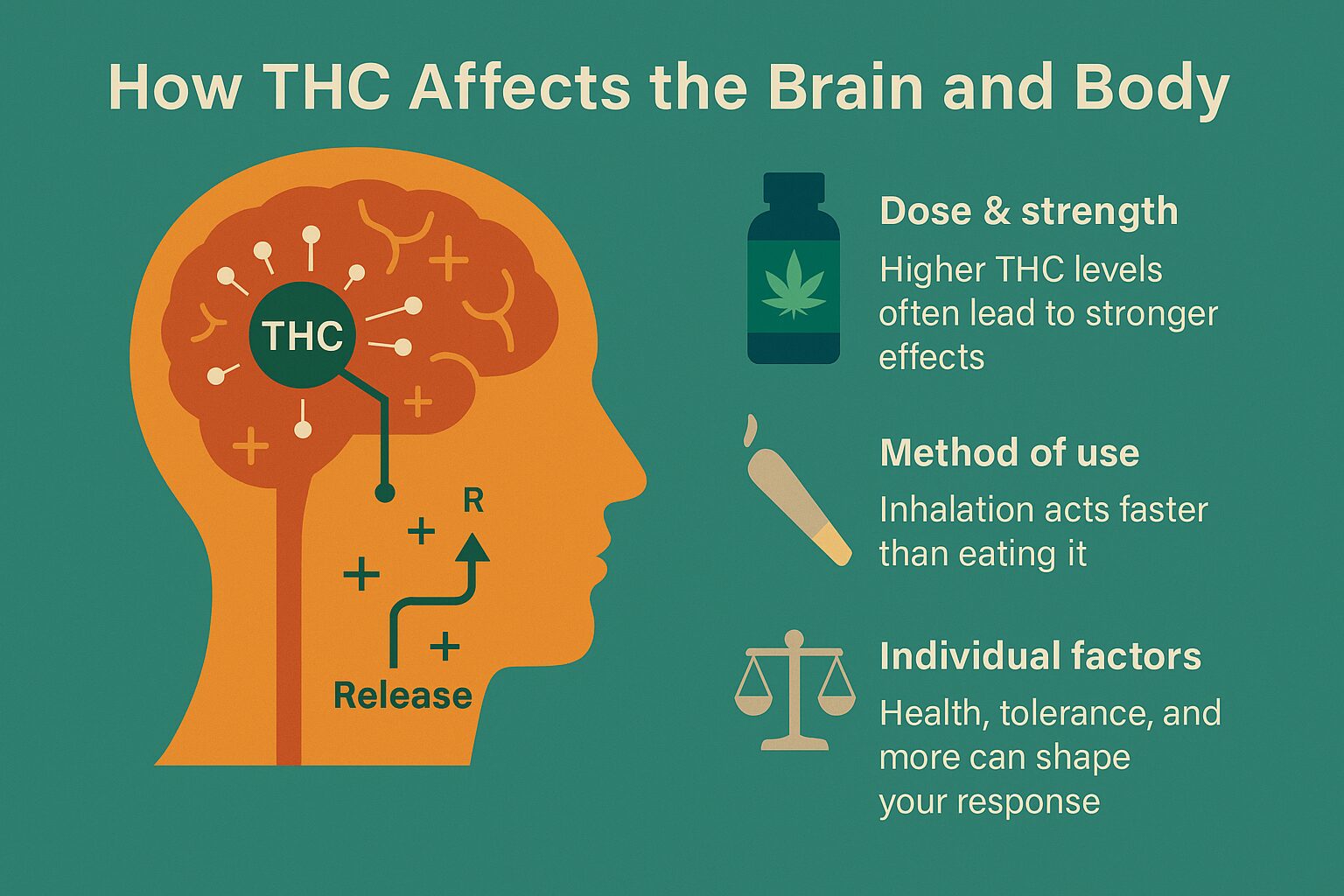
THC doesn’t just enter your body, it interacts with a complex system already at work. When it binds to cannabinoid receptors in your brain, it affects functions such as mood, hunger, and memory.
Some of the key effects include:
- Increased dopamine — the “feel-good” chemical
- Altered short-term memory
- Changes in perception of time
- Slowed coordination and reaction
Factors that influence how high you feel:
- Dose & strength: Modern cannabis can have much higher THC than older strains, so start low.
- How you take it: Smoking or vaping works within minutes; edibles or pills take longer but last longer.
- Individual Differences – Weight, metabolism, tolerance, and mindset all affect the experience.
Understanding science can help you predict your experience and make safer choices.
Meet with a Florida Medical Marijuana Doctor Today
Common Sensations: How Does Getting High Feel?
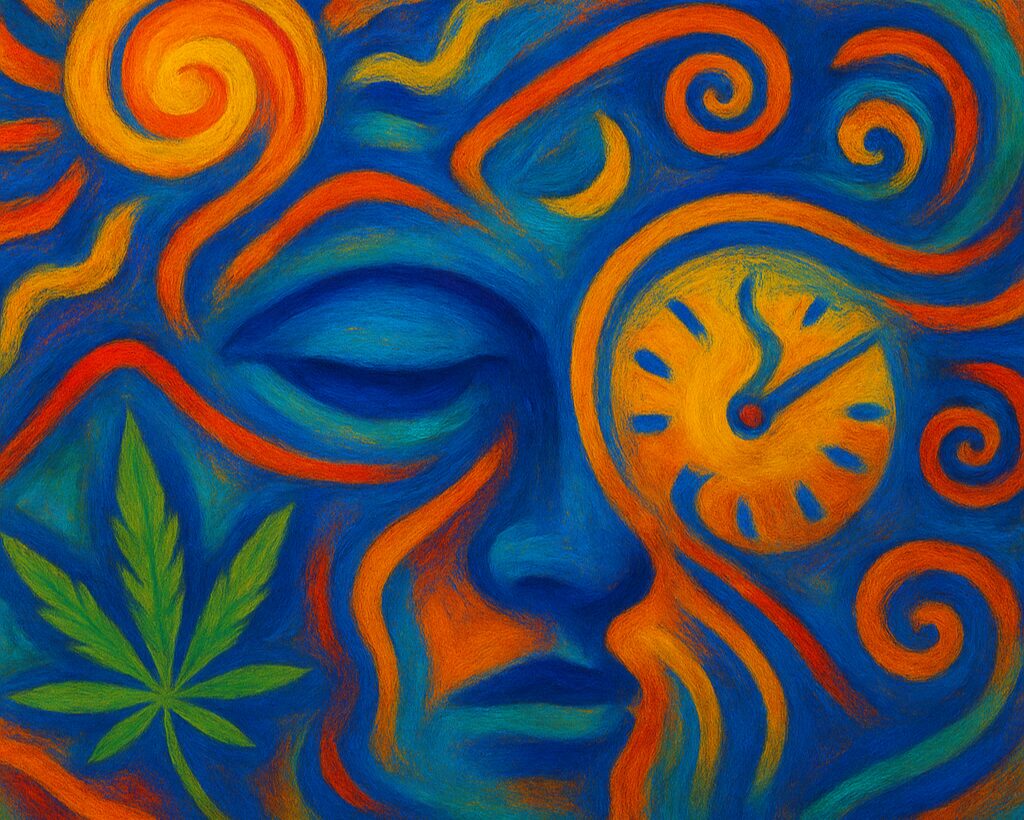
Ask ten people what being high feels like, and you’ll probably hear eleven different versions. Most still land on a few familiar notes.
In your head:
- That easy, lazy happiness — like your brain finally exhaled.
- Time stretches; ten minutes play out like a short film.
- Colors, sounds, and flavors level up — even plain chips feel profound.
- Thoughts take side roads; genius arrives… and sometimes leaves by morning.
In your body:
- You sink into the chair — muscles go soft, worries follow.
- Hunger taps your shoulder; suddenly, everything tastes five-star.
- Your mouth goes dry; water becomes the best drink you’ve ever had.
- Heartbeat ticks up a notch — usually your system doing its job.
It’s great when you’re ready for it. Too much THC or the wrong setting can tilt things toward jitters or confusion. That’s why regulars keep it simple: start small, stay calm.
Knowing that the experience isn’t identical for everyone matters. Some folks feel anxious or suspicious instead—the high is personal.
The Stages of Being High: From Onset to Aftereffects

A cannabis high doesn’t flip on like a light; it rolls in like a playlist with distinct tracks. Each stage has its own tempo and feel.
1) The Onset:
The warm-up. With smoking or vaping, tingles show up in minutes — a quiet shift in awareness, like someone turned a dial. With edibles or THC pills, it’s slower; your gut takes its time, so the buzz might arrive anywhere from 30 minutes to two hours.
2) The Peak:
The headliner. Senses wake up — food’s louder, music’s deeper, laughter comes easy. The world can feel sharper and dreamier at once. Joy, creativity, or plain silliness — your mood and surroundings steer it.
3) The Comedown:
The fade-out. Euphoria eases. You feel calm, maybe a little heavy-eyed, a bit reflective. That’s your body cruising back toward baseline.
4) The Aftereffects:
A soft glow lingers. Some get sleepy; others just feel quietly okay. A snack, some water, gentle music — perfect landing kit.
Reading your own stages helps you pace the night. When you know where you are, the ride feels smoother.
Methods of Consumption: Smoking, Vaping, Edibles, and THC Pills
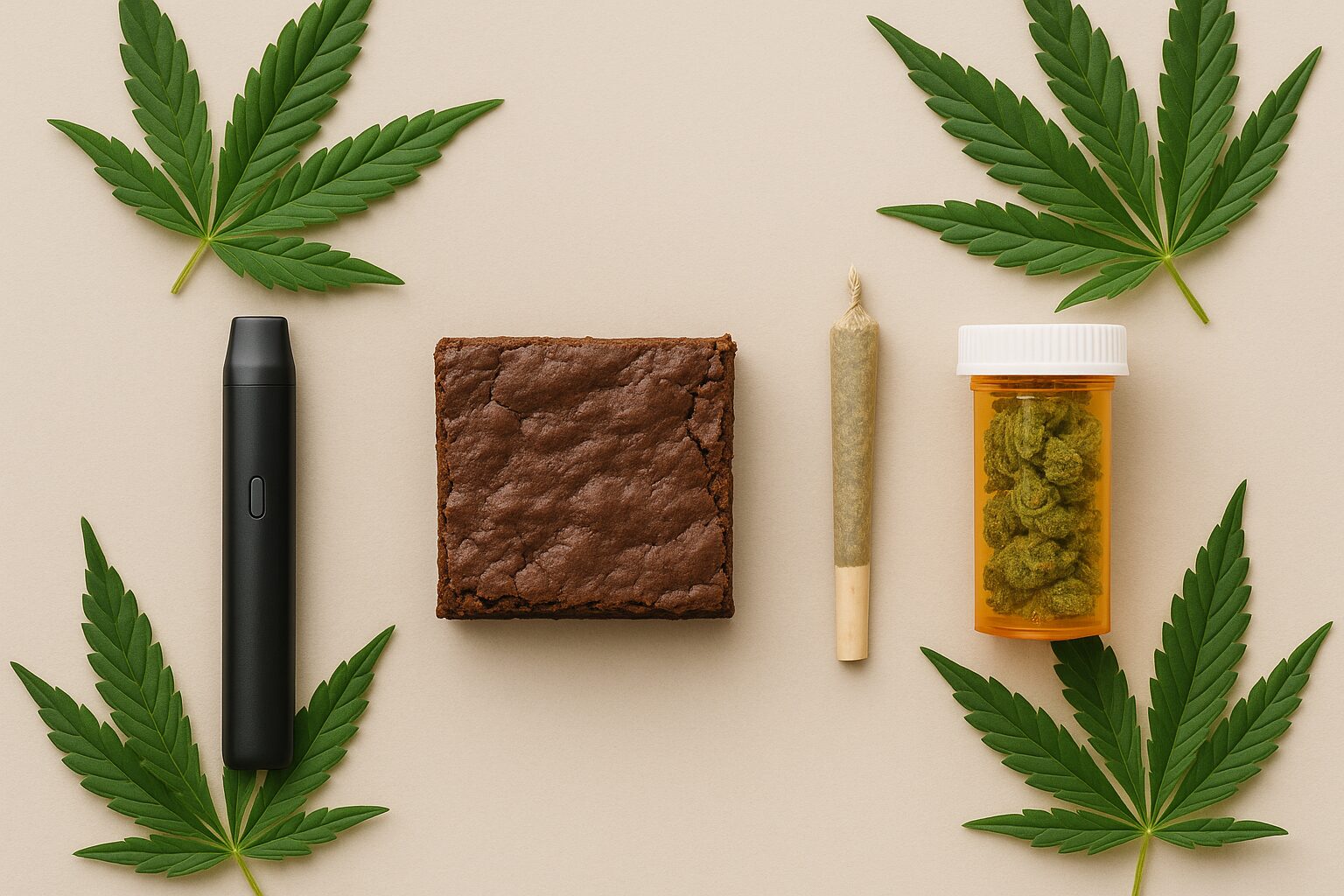
There’s no “right way” to enjoy cannabis — and each one writes its own story. Some start with the old-school puff; others prefer the stealthy vape or the delayed drama of an edible. Here’s how they differ:
Smoking
– The classic. You’ll feel the effects within seconds, like your brain just turned the contrast up on life. But the smoke can be harsh on the throat and lungs.
Vaping
– Think of it as the “smartphone version” of smoking — smoother, less smell, and easier on the lungs. Vaporized THC hits fast, too, often within minutes.
Edibles
– The slow burn. You eat it, forget about it, and an hour later, you’re staring at your ceiling fan, wondering when it became so hypnotic. Edibles last longer and hit deeper because THC passes through the liver, which transforms it into a more potent compound.
THC Pills
—Perfect for people who want control, not chaos. They offer consistent doses, clean effects, and zero smell. You won’t get the ritual of lighting up, but you’ll get predictability—and for many, that’s worth it.
Knowing how each form behaves lets you pick the one that matches your mood — quick and breezy, or slow and steady.
Factors That Influence the High: Strains, Dosage, and Individual Differences
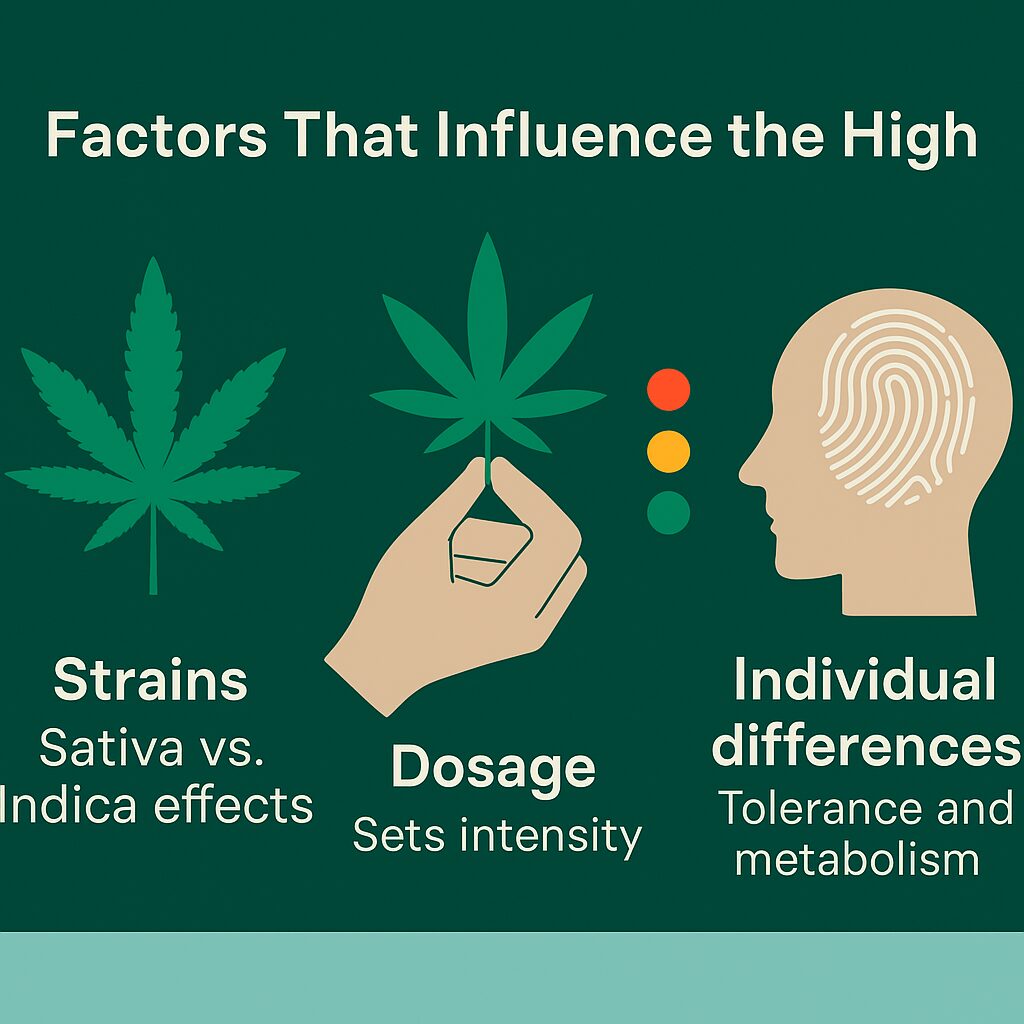
No two highs are identical — even with the same product.
Strain
—Sativas lean bright and brainy; Indicas lean calm and heavy. Most options are hybrids, so you’ll see mixes of both.
Dosage
— A little can feel thoughtful and light; a lot can feel fuzzy or intense. It’s easier to add than subtract.
Body & mind
— Metabolism, weight, tolerance, sleep, food in your stomach, and mood all nudge the result.
Your best high ends up being yours alone — more like a fingerprint than a formula.
Key Influences on the THC Experience:
- Strains: Sativa vs. Indica effects
- Dosage: Sets intensity
- Individual differences: Tolerance and metabolism
Being informed lets you aim for the experience instead of guessing. Dialing it in usually means more enjoyment and more safety.
Positive and Negative Effects: Euphoria, Anxiety, and More

Cannabis can be a gentle ally or a loud teacher, depending on dose and context.
The good stuff:
- That floaty lift that makes regular music feel like a live set
- Deep physical ease — tension loosens, shoulders drop
- A creative spark, sharper senses, contagious laughter
The hard parts:
- Racing thoughts or edginess, especially in noisy or unfamiliar places
- Slippery memory — conversations loop, snacks disappear
- Slower coordination and reaction — not a driving kind of night
It’s not about fear; it’s about knowing your boundaries.
The Role of Set and Setting: How Environment and Mindset Shape the Experience

What you bring in and where you are both are of profound importance.
“Set” is your mindset — your mood, expectations, and mental space. “Setting” is your environment — the room, the people, the vibe.
If you’re relaxed, happy, and surrounded by good company, you’ll probably have a smooth, fun ride. But if you’re stressed or in a chaotic setting, even a mild dose can feel heavy.
So, curate your experience. Choose calm over chaos. Light over noise. Music you love, company you trust, and a couch that won’t judge you.
Cultural and Historical Perspectives on Being High
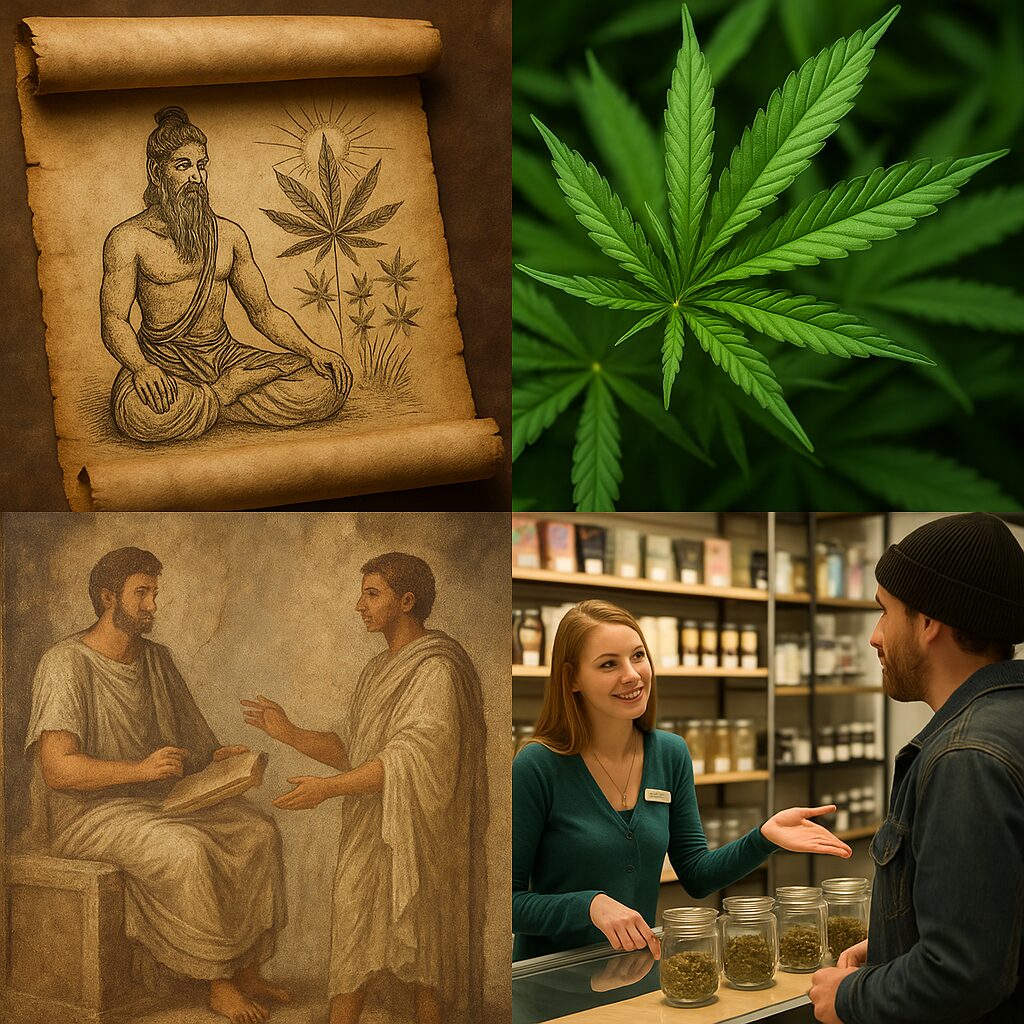
Humans have had a long relationship with cannabis — longer than most modern medicines.
Ancient cultures used it in rituals, healing, and even philosophy. It was seen as a bridge between the physical and spiritual.
Fast forward to today: research and legalization are reframing cannabis not as taboo, but as a legitimate tool for health and well-being. The plant that once carried stigma is now entering pharmacies, clinics, and wellness studios.
Understanding that history helps you appreciate cannabis as more than just “a high”. It’s part of a much bigger story — one that’s evolving with us.
Historical and Cultural Use Cases:
- Spiritual Use: Ceremonial and ritualistic
- Medicinal Use: Pain relief, anxiety reduction
- Modern Shifts: Legalization, scientific interest
While stigmas still exist, acceptance is growing. This reflects broader changes in how societies view consciousness.
Responsible Use and Safety Tips
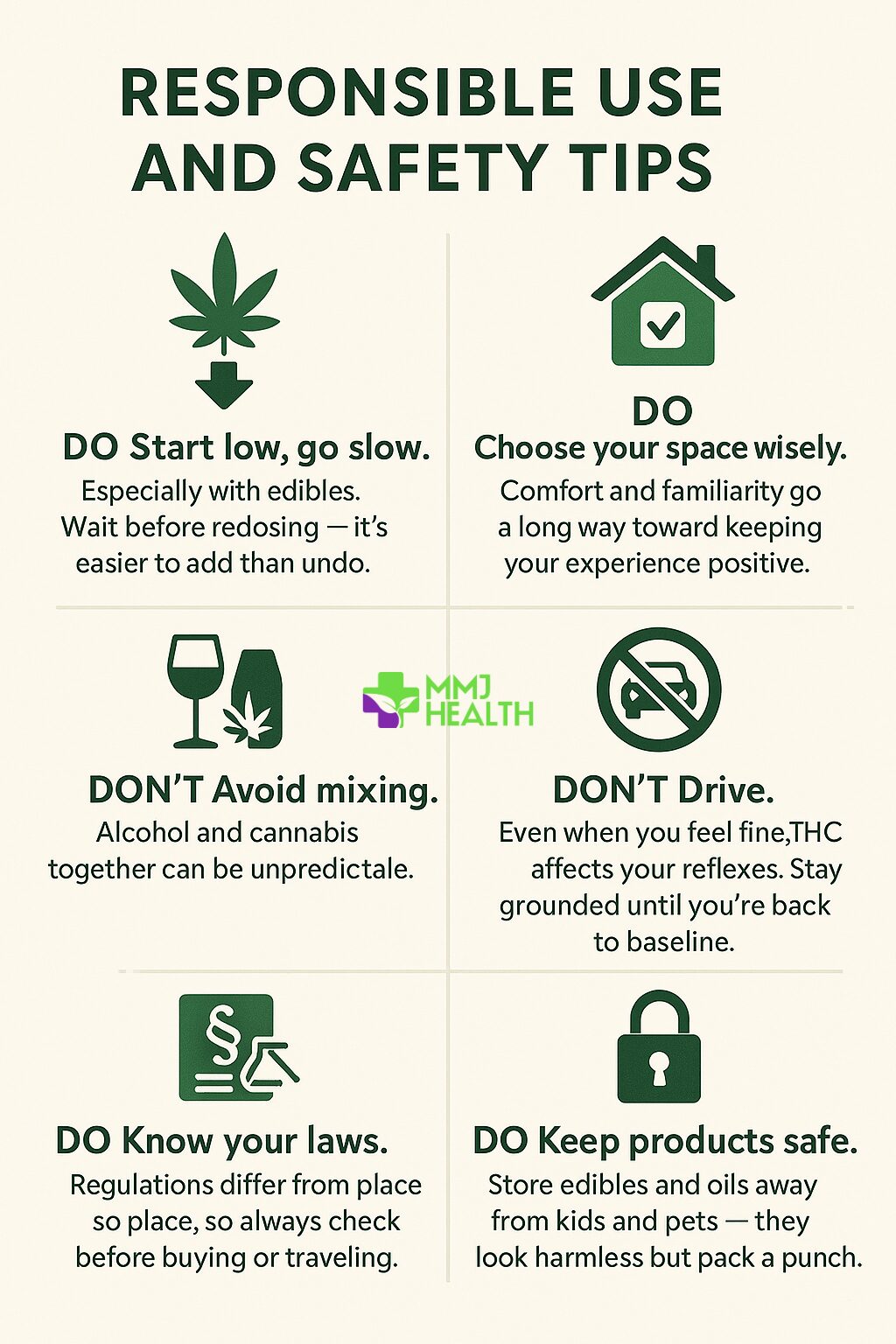
Cannabis can be wonderful when approached with respect. Think of these as your friendly safety rails:
- Start low, go slow. Especially with edibles. Wait before redosing — it’s easier to add than undo.
- Avoid mixing. Alcohol and cannabis together can be unpredictable.
- Know your laws. Regulations differ from place to place, so always check before buying or traveling.
- Choose your space wisely. Comfort and familiarity go a long way toward keeping your experience positive.
- Don’t drive. Even when you feel fine, THC affects your reflexes. Stay grounded until you’re back to baseline.
- Keep products safe. Store edibles and oils away from kids and pets — they look harmless but pack a punch.
A mindful approach turns cannabis into what it was always meant to be — a tool, not a trap.
Conclusion: Embracing the Complexity of the High
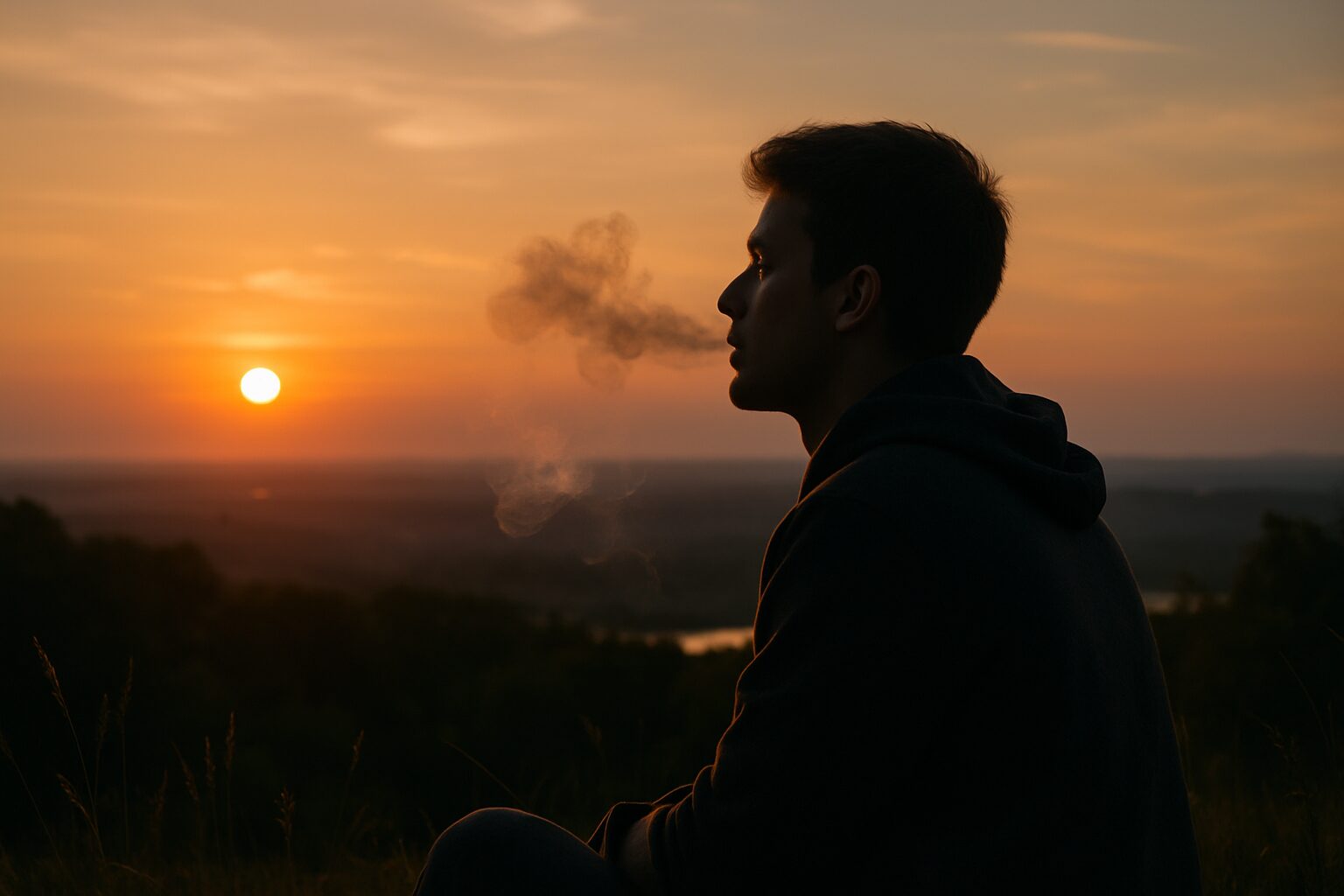
Being high isn’t escape so much as a shift in angle. If you understand the mechanics — dose, method, mood, setting — you can enjoy the view instead of stumbling through it.
From first ripple to afterglow, each session is shaped by chemistry and context. Respect the process, listen to your body, and let curiosity stay in charge.
Go slow. Stay aware. Learn what works for you.
References:
- “Cannabis effects on brain structure, function, and cognition” — review of long-term & recreational use.
https://www.ncbi.nlm.nih.gov/pmc/articles/PMC7027431/ - “Cannabinoid Receptor 1 Gene by Cannabis Use Interaction on CB1 …” — how THC binds to CB1 receptors.
https://www.ncbi.nlm.nih.gov/pmc/articles/PMC5628563/ - “Review of the Endocannabinoid System” — a deep dive into how the ECS works overall.
https://www.ncbi.nlm.nih.gov/pmc/articles/PMC7855189/ - “Mechanisms of Action and Pharmacokinetics of Cannabis” — how different consumption methods and body chemistry matter.
https://www.ncbi.nlm.nih.gov/pmc/articles/PMC8803256/ - “Brain and behaviour: understanding the neural effects of cannabis” (Nature) — more accessible reading about how THC affects the brain.
https://www.nature.com/articles/d41586-023-00470-x Nature - “Cannabis and Brain Health” (CDC) — good for summarizing broader risk/benefit context.
https://www.cdc.gov/cannabis/health-effects/brain-health.html

