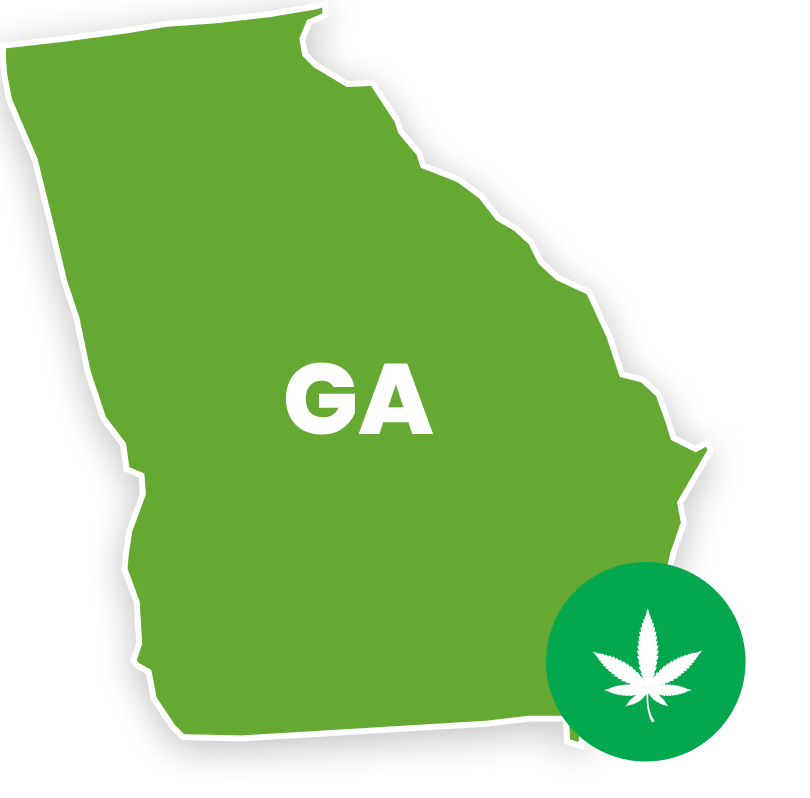



Conditions in Georgia
If you’ve been living with a chronic condition and wondering whether medical cannabis could be part of your care plan, you’re not alone. Many Georgia residents are managing real symptoms every day, unsure whether their diagnosis is on the approved list or how to take the next step. The good news: Georgia’s medical marijuana program has expanded significantly in 2026, and more patients than ever are now eligible.
Under SB 220 (the Putting Georgia’s Patients First Act), the state now recognizes 20 qualifying conditions and has updated both product formats and potency limits to better serve patients. At MMJ Health, our board-certified physicians guide Georgia patients through the evaluation process quickly and confidently. Telehealth appointments are available, and most patients complete their consultation in under 30 minutes.


Following the passage of SB 220 (the Putting Georgia’s Patients First Act) in April 2026, Georgia now recognizes 20 qualifying conditions for its medical cannabis program. The updated list includes cancer, epilepsy, PTSD, Parkinson’s disease, multiple sclerosis, chronic pain, autism spectrum disorder, lupus, severe arthritis, severe insomnia, inflammatory bowel disease, and others. If a licensed Georgia physician determines that your condition is on the approved list and that medical cannabis may support your care, you may be eligible for registration.
Georgia’s program is unique:
Georgia issues a Low THC Oil Registry Card, not a traditional medical marijuana card, but it provides legal protection to purchase and possess low-THC cannabis oil products.
You need a physician’s recommendation from a licensed Georgia doctor before you can register with the state.
Same-day appointments
Same-day appointments are available through MMJ Health, so you can start the process today.
20 approved conditions:
20 conditions are now approved under Georgia law following the passage of SB 220 in April 2026, including newly added conditions like lupus, severe arthritis, severe insomnia, and inflammatory bowel disease.
Telehealth evaluations are available:
You don’t need to travel to an office telehealth evaluations are available.
Georgia’s medical cannabis program is governed by the Haleigh’s Hope Act and administered through the Georgia Access to Medical Cannabis Commission (GMCC). With the passage of SB 220 (the Putting Georgia’s Patients First Act) in April 2026, the program has been meaningfully expanded. The following 20 conditions now qualify:
This list reflects Georgia law as updated by SB 220 in April 2026. The Georgia Access to Medical Cannabis Commission has the authority to review and update qualifying conditions going forward.
Following SB 220, Georgia officially replaced the term “low THC oil” with “medical cannabis.” Qualifying patients register through the Georgia Department of Public Health and receive a registry card that provides legal protection to purchase, possess, and use approved medical cannabis products from a licensed dispensary.
A significant change under SB 220 is the THC potency limit, raised from 5% to up to approximately 50% THC (or 12,000 mg total THC). This enables more clinically effective dosing and gives physicians greater flexibility. Vaporization has also been added as a permitted delivery method alongside oils, tinctures, and capsules.
Your physician submits a recommendation directly to the state. After that, you register online through the DPH portal. Cards are typically issued within a few weeks of completing your application.
Not every diagnosis fits neatly into a named category. If your condition isn’t listed above, it’s worth knowing about the intractable pain provision.
Under Georgia law, intractable pain is defined as pain that has been determined by a treating physician to be resistant to other forms of treatment. This is a meaningful provision it means patients dealing with conditions like fibromyalgia, degenerative disc disease, certain nerve conditions, or other sources of chronic, treatment-resistant pain may still qualify.
Your recommending physician must be licensed to practice medicine in Georgia and must have an established patient relationship with you. They need to document that your condition is part of Georgia’s approved list, that conventional treatments have been considered or attempted, and that low-THC cannabis oil may be beneficial for your symptoms.
At MMJ Health, our physicians conduct thorough, compassionate evaluations and will help determine whether your diagnosis and medical history support a recommendation. There’s no judgment only a clear, honest assessment. If you qualify, we’ll say so. If additional documentation is needed, we’ll guide you through it.

The process has three main steps, and it’s more manageable than many patients expect:


MMJ Health offers secure, HIPAA-compliant telehealth appointments with board-certified physicians experienced in Georgia’s program. Most evaluations are completed in under 30 minutes. Same-day appointments are available so there is no need to wait.
SB 220 meaningfully expanded what Georgia patients can access. Products must still be purchased from a licensed dispensary operating under the Georgia Access to Medical Cannabis Commission, but the range of available formats has grown.
Oils and tinctures
Topical products
Capsules and softgels
Vaporization products
(newly permitted under SB 220)
It usually takes about 7-10 days for the Georgia Department of Public Health (DPH) to process your registration and notify you when your card is ready for pickup.
Georgia doesn’t have a full reciprocity program, but if you’re visiting for less than 45 days and have a valid medical cannabis card from another state, you may legally carry low-THC oil—as long as it’s allowed under both your home state and Georgia law. For longer stays or full access, you’d need to register with Georgia’s medical cannabis program.
While Georgia allows qualified patients to use low-THC medical cannabis, employers are not required to accommodate its use. This means you could still face workplace drug testing and possible consequences if THC shows up, even with a medical card. If you’re concerned, it’s best to check your employer’s policy or speak with an employment attorney.
No, recreational marijuana is still illegal in Georgia. Your card only allows legal access to low-THC oil for approved medical conditions. Using or possessing marijuana for recreational purposes is still prohibited under state law.
Georgia allows only low-THC oil with a THC content of 5% or less.
As long as you are registered with the Georgia Low THC oil registry and use low-THC oil according to state guidelines, there are no legal risks.
No, recreational weed is illegal in Georgia. The state’s cannabis program allows the use of low-THC oil.
Experience: 32+ years in family medicine; former Medical Director for United Health, Humana, and Metropolitan Health.
Specialties: Medical Marijuana Medicine, Family Medicine.
Patient Approach: Personalized treatment plans tailored to individual needs and goals.
Medical School/Certifications: Board-certified by the Society of Cannabis Clinicians and the American Academy of Cannabis Medicine; Diplomate of the American Academy of Family Physicians.
Experience: 30+ Years in Holistic Medicine, Former Founder & Medical Director of Women for Women; Co-Founder of P.L.A.N.T.S. for Lyfe; Public Speaker & Educator in Medical Cannabis
Specialties: Cannabis Advocate, Educator, Consultant
Patient Approach: Advocates for holistic and plant-based treatments, emphasizing patient education in cannabis medicine.
Medical School/Certifications: Emory University School of Medicine; certified by The Medical Cannabis Institute.
Experience: 47 years of medical practice specializing in gynecology and pelvic pain management.
Specialties: Gynecology, Pelvic Pain Management, Medical Marijuana Medicine.
Patient Approach: Expertise in managing complex gynecological conditions with cannabis-based treatments.
Medical School/Certifications: Thomas Jefferson College of Medicine; DEA Certified.

Experience: Over 14 years in urgent care, chronic care management, and telehealth.
Specialties: Emergency Medicine, Pain Management, Chronic Care.
Patient Approach: Comprehensive care addressing chronic pain and urgent medical needs.
Medical School/Certifications: Michigan State University Residency in Emergency Medicine.
Experience: Extensive background in Internal Medicine and Medical Marijuana Medicine.
Specialties: Internal Medicine, Medical Marijuana Medicine.
Patient Approach: Focused on improving health outcomes through cannabis-based therapies.
Medical School/Certifications: Rutgers New Jersey Medical School; Board-certified in Internal Medicine.

Experience: Trained in Internal Medicine; residency completed at NYU Langone Hospital—Suffolk.
Specialties: Internal Medicine, Medical Marijuana.
Patient Approach: Comprehensive and compassionate care centered around individual patient needs.
Medical School/Certifications: Graduate of Xavier University School of Medicine; certified in Medical Marijuana treatment.
Georgia’s medical cannabis program offers real relief to patients living with serious, chronic conditions, and SB 220 has made it more accessible than ever before. Whether you have one of the 20 approved conditions or think you may qualify under the intractable pain provision, the best next step is a quick conversation with one of our physicians. Explore our full qualifying conditions guide or head straight to booking.
At MMJ Health, our board-certified physicians know Georgia’s program inside and out. We will review your medical history, answer your questions honestly, and help you move forward with confidence. No pressure, no judgment, and zero financial risk thanks to our 100% money-back guarantee.
Most patients complete their evaluation in under 30 minutes. Telehealth appointments are available statewide, and same-day scheduling means you can start the process today.